

Earthly Things – Ghostly Matters
Dimitrina Sevova
Dimitrina Sevova, Swiss-Bulgarian artist. Holds a Master of Fine Arts from the University of the Arts ZHdK, Zurich, and graduated in the painting class of Prof. Andrei Daniel at the National Academy of Art, Sofia. She also completed a MAS Curating from the Institute for Cultural Studies in the Arts of ZHdK.
Artist Statement:
Dimitrina Sevova’s artistic practice navigates the tension between painting and sculpture. Her works are often presented in site-specific and context-related installations that utilize various additional media such as found objects, drawings, photographs, or time-based media. Exploring different materials and experimenting with the materiality of artworks are the fundamental principles of her research-oriented and hand-grounded practice. The artist divides her working process between studio and outdoor, harvesting different materials and moods that she later uses in her work. As in alchemy, it requires a mutual affinity between the artist and the materials. For the artist, research is a method and a way of creating informed by scientific realism with its objective reality, which she translates through imagination and intuition into ambiguous, performative, subjective states of matter and things. In her work, the artist shifts the perspective between two systems: on the one hand, representative models and figurative fictions, and on the other, the abstract, concrete, and performative qualities of reality and materiality itself. Between micro and macro, between the (in)organic and the world ruled by images, a mysterious manifestation of natural and technological magic underscores the dark undertones of poetic ecologies and earthly mud.
The motto of her work is: “Deskill craft, re-skill art,” in order to reconnect thinking with making and overcome the dualism of culture and nature.
Dimitrina Sevova, schweizerisch-bulgarische Künstlerin. Hat einen Master of Fine Arts der Zürcher Hochschule der Künste (ZHdK) und absolvierte die Malerei-Klasse von Prof. Andrei Daniel an der Nationalen Kunstakademie in Sofia. Ausserdem schloss sie einen MAS Curating am Institut für Kulturwissenschaften in den Künsten der ZHdK ab.
Artist Statement:
Dimitrina Sevovas künstlerische Praxis bewegt sich im Spannungsfeld zwischen Malerei und Skulptur. Ihre Werke werden oft in ortsspezifischen und kontextbezogenen Installationen präsentiert, die verschiedene zusätzliche Medien wie Fundstücke, Zeichnungen, Fotografien oder zeitbasierte Medien nutzen. Die Erforschung verschiedener Materialien und das Experimentieren mit der Materialität von Kunstwerken sind die Grundprinzipien ihrer forschungsorientierten und handwerklich fundierten Praxis. Die Künstlerin teilt ihren Arbeitsprozess zwischen Atelier und Aussenbereich auf und sammelt verschiedene Materialien und Stimmungen, die sie später in ihren Arbeiten verwendet. Wie in der Alchemie erfordert dies eine gegenseitige Affinität zwischen der Künstlerin und den Materialien. Für die Künstlerin ist Forschung eine Methode und eine Art des Schaffens, die von wissenschaftlichem Realismus mit seiner objektiven Realität geprägt ist und die sie durch Vorstellungskraft und Intuition in mehrdeutige, performative, subjektive Zustände von Materie und Dingen übersetzt. In ihrer Arbeit wechselt die Künstlerin die Perspektive zwischen zwei Systemen: einerseits repräsentativen Modellen und figurativen Fiktionen, andererseits den abstrakten, konkreten und performativen Eigenschaften der Realität und Materialität selbst. Zwischen Mikro und Makro, zwischen dem (in)organischen und der von Bildern beherrschten Welt unterstreicht eine geheimnisvolle Manifestation natürlicher und technologischer Magie die dunklen Untertöne poetischer Ökologien und irdischen Schlamms.
Das Motto ihrer Arbeit lautet: „Deskill craft, re-skill art“, um das Denken wieder mit dem Schaffen zu verbinden und den Dualismus von Kultur und Natur zu überwinden.


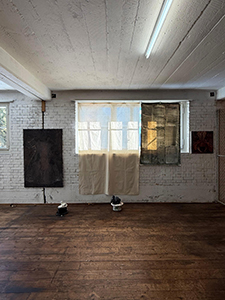
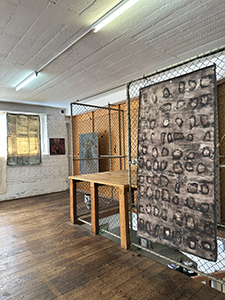
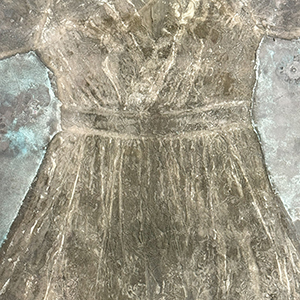
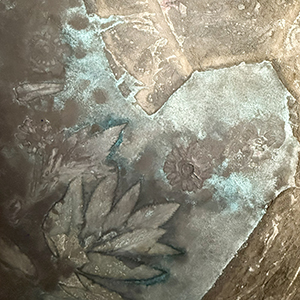
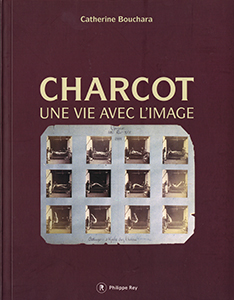
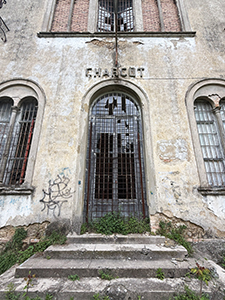
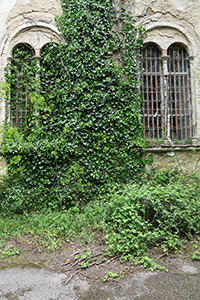
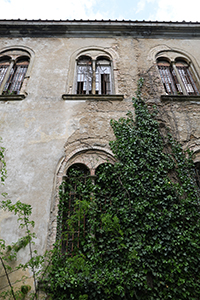
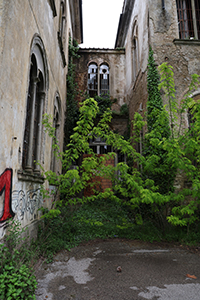
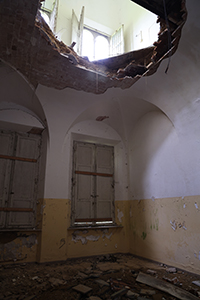
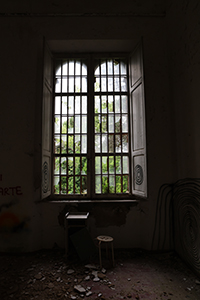
Dimitrina Sevova, Haunted Ecologies of Care: Hysteria, Ruins, and the Wild Reclaiming of Space (work in progress), 2025. Studio and exhibition views, details
Haunted Ecologies of Care: Hysteria, Ruins, and the Wild Reclaiming of Space (work in progress), 2025
In this installation, I brought together some paintings and objects that are part of a long-term research project in which I deal with the psychoanalytic aspects of the development of capitalism in the 19th century, during which the fast pace of technological change led to the idea that civilized man can overrule nature and discipline the female body, but also refine her psyche, understood as a virgin canvas onto which all kinds of monstrous images could be projected. It was a time in which mentalism, hypnosis, and spiritual sessions flourished with the rise of new technological devices, but also of the free market seen as a natural force, accompanied by the trickery of advertizing that appropriated the aura of the object, which remains an empty vessel whose materiality has become secondary. I explore hysteria and its representation in psychiatry and art, and the ruins of the Ospedale Psichiatrico di Volterra as a site where medical history, institutional critique, and ecology intersect. Drawing on thinkers like Jung, Guattari, and feminist theorists, the project reconsiders hysteria as a contested historical concept and as a metaphor for resistance, aiming to produce a coherent body of research-driven yet poetic works that make visible the entanglements of body, psyche, society, economy, and environment.
Haunted Ecologies of Care: Hysteria, Ruins, and the Wild Reclaiming of Space (work in progress), 2025
In dieser Installation habe ich einige Gemälde und Objekte zusammengeführt, die Teil eines langfristigen Forschungsprojekts sind, in dem ich mich mit den psychoanalytischen Aspekten der Entwicklung des Kapitalismus im 19. Jahrhundert befasse. In dieser Zeit führte der rasante technologische Wandel zu der Vorstellung, dass der zivilisierte Mensch die Natur beherrschen und den weiblichen Körper disziplinieren, aber auch ihre Psyche verfeinern könne, verstanden als eine leere Leinwand, auf die alle möglichen monströsen Bilder projiziert werden konnten. Es war eine Zeit, in der Mentalismus, Hypnose und spiritistische Sitzungen mit dem Aufkommen neuer technologischer Geräte, aber auch des freien Marktes, der als natürliche Kraft angesehen wurde, florierten, begleitet von der Täuschung der Werbung, die sich die Aura des Objekts aneignete, das zum leeren Gefäss wurde, dessen Materialität zweitrangig ist. Ich untersuche Hysterie und ihre Darstellung in der Psychiatrie und Kunst sowie die Ruinen des Ospedale Psichiatrico di Volterra als einen Ort, an dem sich Medizingeschichte, Institutionskritik und Ökologie überschneiden. Unter Rückgriff auf Denker wie Jung, Guattari und feministische Theoretikerinnen betrachtet das Projekt Hysterie als umstrittenes historisches Konzept und als Metapher für Widerstand und zielt darauf ab, ein kohärentes Werk aus forschungsorientierten und dennoch poetischen Arbeiten zu schaffen, die die Verflechtungen von Körper, Psyche, Gesellschaft, Wirtschaft und Umwelt sichtbar machen.